Are Insulated Garage Doors Worth It in the Tri-Cities?
Insulation is one of those upgrades that sounds optional until you spend a January morning in a cold garage or a July afternoon in a hot one.
September 30, 2026 · 4 min read
The Tri-Cities has real seasons. Summers are hot and dry, winters bring cold snaps, and the garage sits right in the middle of it, collecting whatever the weather throws at it. For many homes, the garage door is the largest moving part of the outside wall, so what it is made of matters.
If you are replacing a door, or building a new home, you will be asked if you want it insulated. Here is a plain look at what that means, where it helps most and where it is not worth the money.
What makes a door insulated
A basic garage door is a single layer of steel, wood or another material. It keeps out rain and wind, but it does little to slow heat moving through it. An insulated door has an extra layer, usually a core of foam or similar material, sandwiched between the outer skin and an inner panel. That layer slows the flow of heat in and out, and it also makes the door more rigid.
You will sometimes see a number called an R-value on insulated doors. It is a measure of how well a material resists heat flow, and higher means better resistance. You do not need to memorize the scale. The point is that insulated doors are designed around it, and non-insulated doors are not.
Noise, drafts and feel
People often buy insulated doors for temperature and end up loving them for something else, which is sound. A thicker, more solid door is less rattly and quiets the world outside. Street noise, lawn equipment and passing traffic all reach you less. If your garage shares a wall with a bedroom or a home office, that matters a lot.
Insulated doors also tend to feel more solid when you close them. Masters Garage Doors notes that insulated doors maintain garage temperatures, reduce heating and air conditioning costs and help eliminate outside noise. They also offer metal roll-up doors, for people who need something tough and simple.
Attached garages and your home's comfort
If your garage is attached to the house, the door has a bigger effect than you might expect. A cold garage chills the wall, floor and any room that sits above or beside it. A hot garage does the opposite in summer. The garage becomes a heat source or heat sink that your heating and cooling system has to work around.
An insulated door will not turn a garage into a living room, and it is not a substitute for insulated walls and a sealed entry door. But it takes some of the load off. Keeping the garage temperature steadier means your heating and cooling do less work at the edges of the house, which can show up on your energy bills. The size of that saving depends on your home.
Detached garages, workshops and storage
Not every garage needs the same thing. If it is a detached building where you keep lawn gear and boxes, a basic door may be all you need. If you use it as a workshop, a gym or a place to work on vehicles, insulation starts to matter. If you store paint, tools with sensitive parts, or anything that does not like temperature swings, a steadier space helps too.
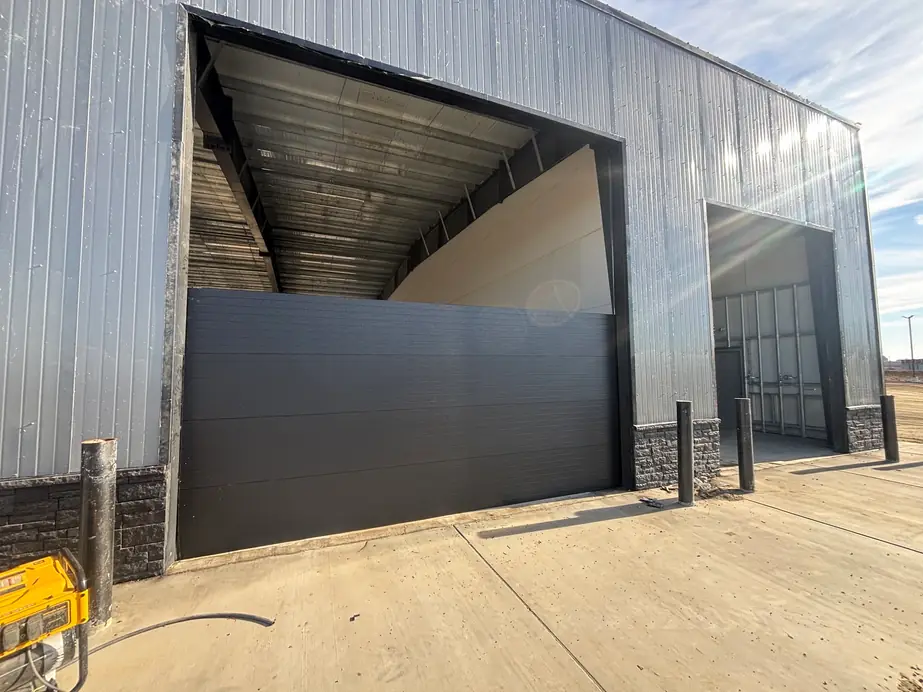
For commercial buildings, the answer depends on how the space is used. Masters Garage Doors does commercial evaluations and business-grade installations, and their photo gallery includes an insulated sectional door going in on a commercial metal building.
Weatherstripping: the small part that does a lot
Even the best insulated door leaks if the gaps around it are open. Weatherstripping is the rubber or vinyl seal along the bottom, sides and top of the door. It closes the gaps between the door and the frame. Over time it gets brittle, cracks or flattens, and the door starts letting in drafts, dust, leaves and the occasional insect.
Masters Garage Doors offers a weatherstripping service that seals gaps in garage doors and protects against noise, drafts and harsh weather. It is a smaller job than a whole new door, and on an older door it can make a noticeable difference. You can often spot worn seals by looking for daylight along the edges when the door is shut, or by feeling air moving at the bottom.
How to decide
- Is the garage attached to the house, or does it sit under a living space?
- Do you spend real time in the garage, working, exercising or storing temperature-sensitive items?
- Does noise from outside or from the door itself bother you?
- Is your current door worn, dented or hard to keep sealed?
- Would new weatherstripping handle the drafts, or is the door itself the problem?
If you answered yes to a few of those, an insulated door is worth a serious look. If the door is fine and the drafts are at the edges, start with weatherstripping.
Insulation is one part of a door decision. Masters Garage Doors maintains an extensive inventory of door models for residential customers, including insulated doors, metal roll-up doors and wood doors, and it serves single and multi-car garages alike. The style and color you choose can be matched to your home, which a technician can help with during the consultation.
To talk through insulated doors or weatherstripping for your home, see the garage doors page on this site or call Masters Garage Doors at (509) 531-1477. They serve Richland, West Richland, Kennewick, Pasco and surrounding areas, and the consultation is free.
Masters Garage Doors, (509) 531-1477
Call (509) 531-1477More articles
Garage Door Spring Broke? What to Do Before You Call
A broken spring is one of the most common garage door problems in the Tri-Cities, and one of the easiest to make worse by trying to fight it yourself.
Torsion vs Extension Springs: How Your Door Stays Balanced
Two spring systems do the same job in very different ways, and knowing which one is above your door helps you understand any repair quote.