Garage Door Spring Broke? What to Do Before You Call
A broken spring is one of the most common garage door problems in the Tri-Cities, and one of the easiest to make worse by trying to fight it yourself.
September 30, 2026 · 4 min read
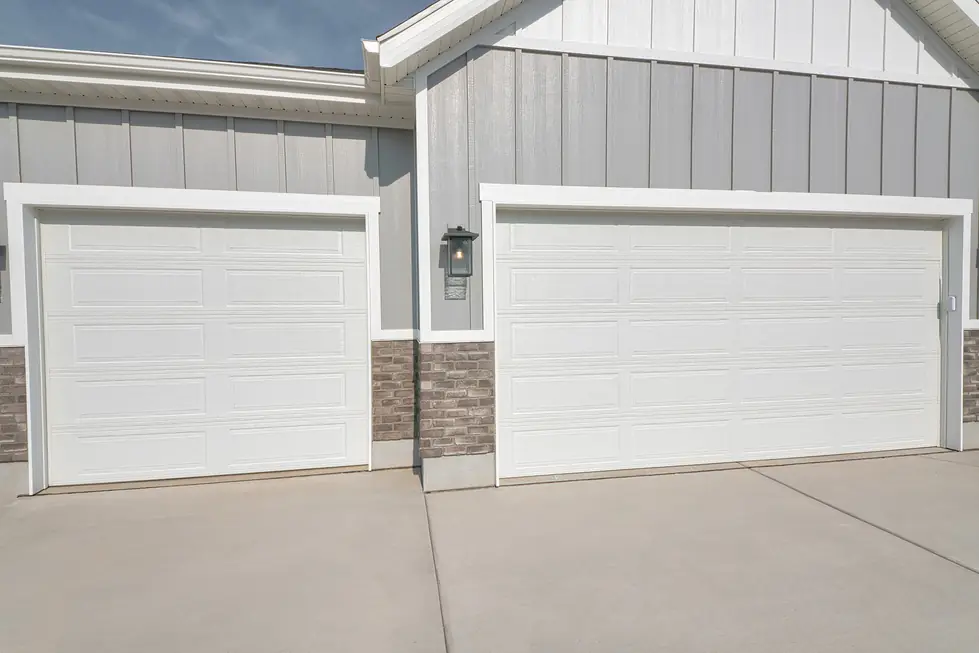
Most people find out about a broken garage door spring the same way. You press the button, the opener hums or strains, and the door either stays put or lifts a few inches and quits. Sometimes there was a loud bang from the garage an hour earlier that you put down to something falling off a shelf. That bang was very likely the spring letting go.
How to tell a spring has broken
A garage door is heavy. A standard two-car door can weigh well over a hundred pounds, and the springs carry nearly all of that weight so the opener only has to guide the door, not lift it. When a spring snaps, the door suddenly weighs what it really weighs, and the opener was never built for that.
Here are the signs that usually point to a broken spring:
- A sharp bang or crack from inside the garage, often heard through a shared wall.
- The opener runs but the door barely moves, or it rises a little and stops.
- The door feels extremely heavy if you pull the release and try it by hand.
- On a torsion system, a visible gap in the coiled spring above the door. The coil looks split in two.
- On an extension system, a stretched-out or separated spring along the side of the horizontal track, or a cable dangling loose.
- The door hangs crooked, because one side lost its spring.
Why you should not lift the door or use the opener
It is tempting to give the door a hand. One person lifts, another presses the button, and the door groans up. Please do not do this. A door without its spring is a full-weight panel on cables, and if it slips or a cable jumps off its drum, it comes down fast.
Running the opener against a dead spring is also how a repair that should have cost one spring turns into a stripped drive gear, a bent rail or a broken opener arm.
Spring work itself is the real hazard. A torsion spring is wound under serious tension, and the tools and technique for winding and releasing it are not something to improvise in a garage with a socket set and a long screwdriver. This is the single most common way homeowners get hurt doing their own garage door repairs, which is why licensed overhead door contractors handle it every day.
Torsion and extension springs: which one you have
There are two main spring systems, and a good tech will identify yours within seconds. A torsion system uses one or two tightly wound coils mounted on a steel shaft across the top of the door opening. An extension system uses a pair of long springs that run alongside the horizontal tracks, one on each side, and stretch and contract as the door moves.
Both do the same job, which is to counterbalance the door. They break for the same reason too: springs are wear parts. Every open and close cycle flexes the metal, and eventually it gives out. Masters Garage Doors works on both types, and the replacement has to be matched to the actual weight of your door, not just bolted in as a generic part.
What the crew does when they arrive
A proper spring repair is more than swapping the broken piece. The technician looks at the door first, checking the cables, drums, rollers, hinges and brackets, because a spring that has just failed has been under strain alongside everything attached to it. They confirm the door weight so the new spring actually balances it.
After the new spring is installed and tensioned, the test that matters is the balance test. With the opener disconnected, the door should rise smoothly by hand and stay where you leave it about halfway up. If it drifts up or crashes down, the balance is off and the job is not done.
Masters Garage Doors also gives maintenance guidance while they are there, so you know what to watch for and how to get more life out of the new spring. On some calls, customers have had the second spring on a two-spring system replaced at the same visit. One reviewer, Josue Gutierrez, said his spring broke overnight and the tech came out the next day, quickly replaced both springs and cleaned up.
Timing, weekends and what customers have said
Springs never seem to break at a convenient time. Masters Garage Doors is open 24 hours, and reviewers describe quick scheduling. Kim Anderson wrote that after a spring broke, they had an appointment within 90 minutes, and a text told them when the crew was on the way. Ralph Eric Leber said Fernando responded quickly to an urgent weekend call and did not charge an extra penny for the emergency visit.
Harish Reddy Gadey wrote that the crew replaced his torsion spring in under an hour, and came back the next day to fix a small unrelated issue at no charge.
What to do right now
- Leave the door where it is, and do not try the opener again.
- If the car is stuck inside, use the red release cord only if the door is fully down, and never stand under a door that is partly open.
- Call a licensed garage door contractor and describe what you heard and saw.
If your spring has let go anywhere in Richland, West Richland, Kennewick or Pasco, see the spring repair page on this site or call Masters Garage Doors at (509) 531-1477. They are licensed in Washington for overhead and garage doors, and they work on both torsion and extension springs.
Masters Garage Doors, (509) 531-1477
Call (509) 531-1477More articles
Torsion vs Extension Springs: How Your Door Stays Balanced
Two spring systems do the same job in very different ways, and knowing which one is above your door helps you understand any repair quote.
Choosing a Garage Door Opener for Your Home
An opener is something you use several times a day, so it is worth understanding what you are buying before you pick one.